Remote Brand Strategy & Design System
Project Overview
As Staff Brand & Product Designer, I spearheaded Remote's rebrand by leading brand research, creative exploration, and the rollout of a scalable multi-platform design system. My focus was on brand positioning, identity creation, and long-term scalability, ensuring the rebrand unified product, marketing, and customer experience at a global scale.
Role
Brand Strategy & Design Lead
Company
Remote
Year
2023–2024
Timeline
6 months (research → strategy → design system rollout)
Team
Distributed design org, marketing, video, and product partners
Achievements
3× faster delivery for brand & marketing requests after Zora Design System launch
//
1,500+ reusable components built across Figma + Adobe for product, marketing, and video
//
90%+ adoption within 3 months across distributed design teams
//
400+ employees engaged in perception study shaping the rebrand attributes
//
Strategic Process — Where I Streamlined Brand Delivery
| Challenge | Action |
|---|---|
|
1. Brand Perception Study → Strategy Remote's brand voice lacked clarity and consistency across markets. |
Led a company-wide perception study (400+ employees) using the 1-Dot method to identify Remote's core attributes (Direct, Bold, Reliable, Global). |
|
2. Creative Exploration → Direction Multiple competing interpretations of brand positioning. |
Developed several creative directions across Figma, Illustrator, Blender, and After Effects — hand-drawing illustrations and testing motion/3D explorations. |
|
3. Design System → Adoption Fragmented assets across product, marketing, and video. |
Built the Zora Design System with 1,500+ components and 400+ styles, including Adobe + Figma libraries for every team. |
|
4. Lifecycle & Automation → Scale Risk of asset sprawl and inefficiency at scale. |
Introduced lifecycle management (audits, retirement rules), Zapier-powered request automation, and AI-assisted asset generation. |
Concepts Based on Research
After the brand perception study with 400+ employees, I translated the identified attributes (Direct, Bold, Reliable, Global, Strong, Sharp) into a set of creative directions. Each concept explored a different way of visualizing Remote's identity and future positioning:
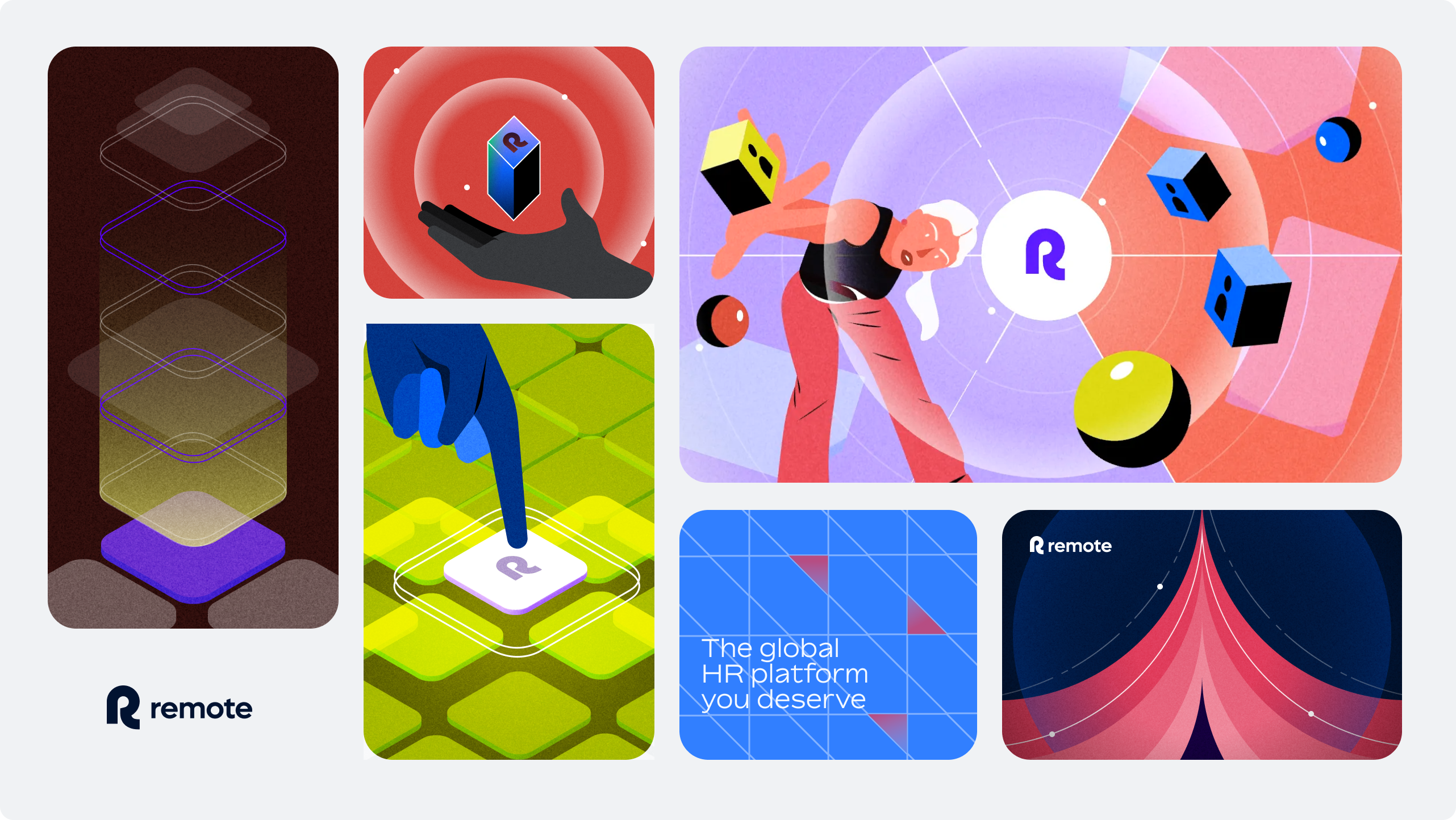
Futuristica
Idea: Abstract, futuristic forms representing Remote as an advanced, technology-forward platform.
Research Link: "Leader" and "Sharper," highlighting innovation and forward vision.
Idea: Abstract, futuristic forms representing Remote as an advanced, technology-forward platform.
Research Link: "Leader" and "Sharper," highlighting innovation and forward vision.
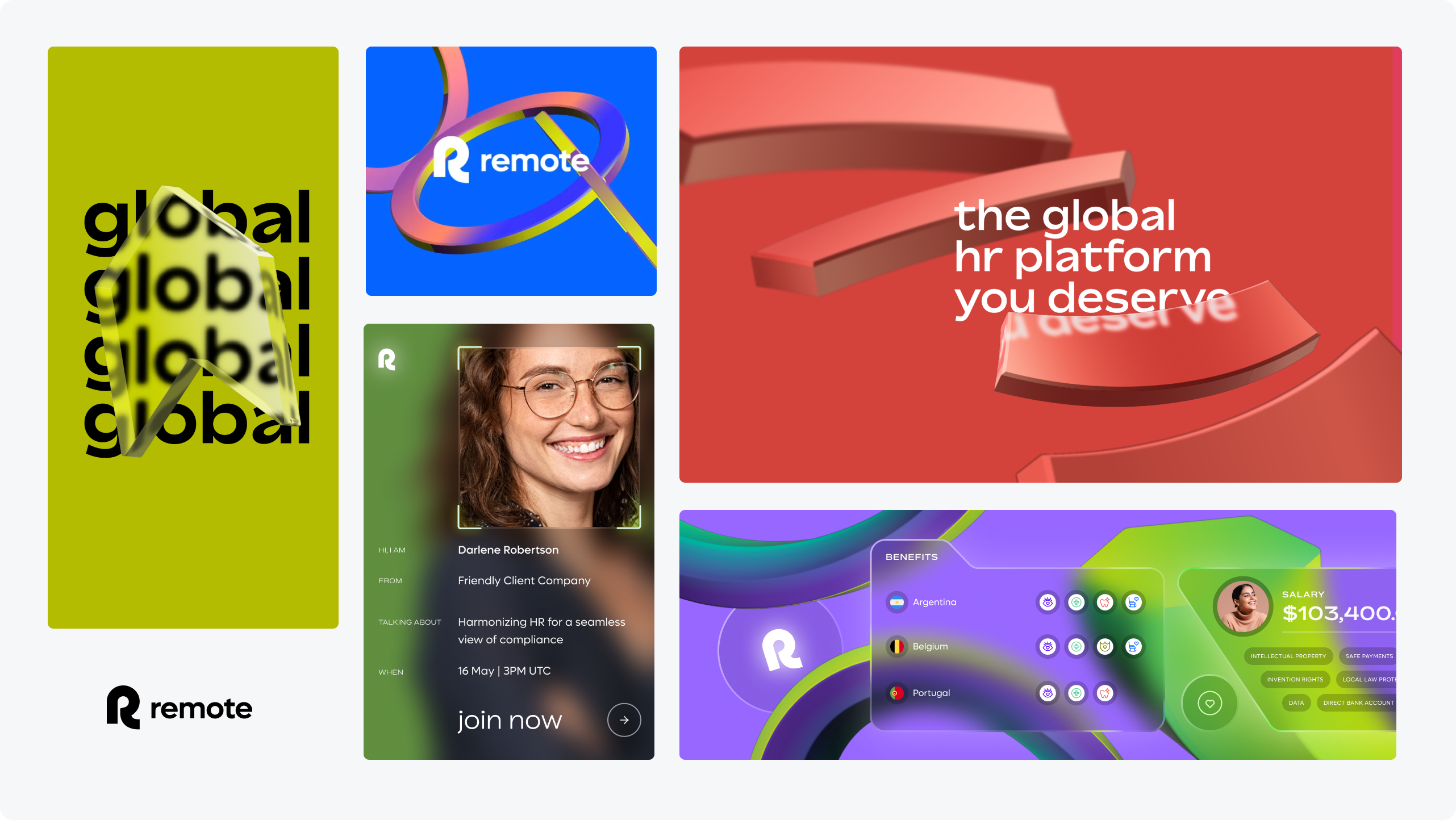
Global Flow
Idea: Express Remote's reach through fluid ribbons, gradients, and motion-based visuals.
Research Link: "Global" and "Happy" attributes, reflecting scale and optimism.
Idea: Express Remote's reach through fluid ribbons, gradients, and motion-based visuals.
Research Link: "Global" and "Happy" attributes, reflecting scale and optimism.
Winning Concept — The Connection
Chosen as the most strategic and scalable direction, The Connection visualizes Remote as a platform where global work, ideas, and data intersect seamlessly.
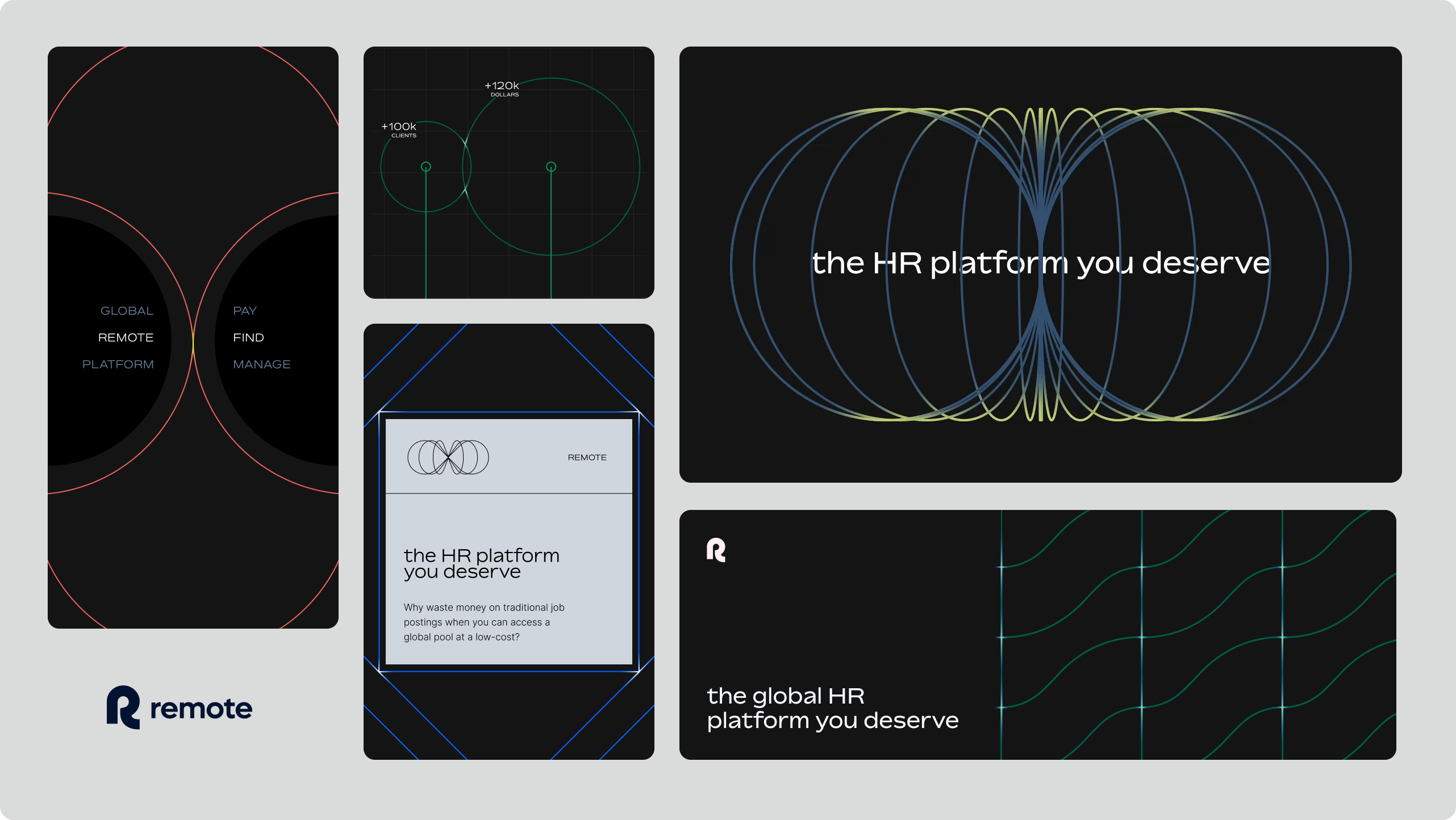
Core Visual: When shapes meet, the point of connection glows — representing collaboration and new possibilities.
Design Language: Dark-mode foundation with color acting as light, drawing attention to key areas.
Scalability: Adapted across product, marketing, video, and motion, with a robust component system.
Reflection
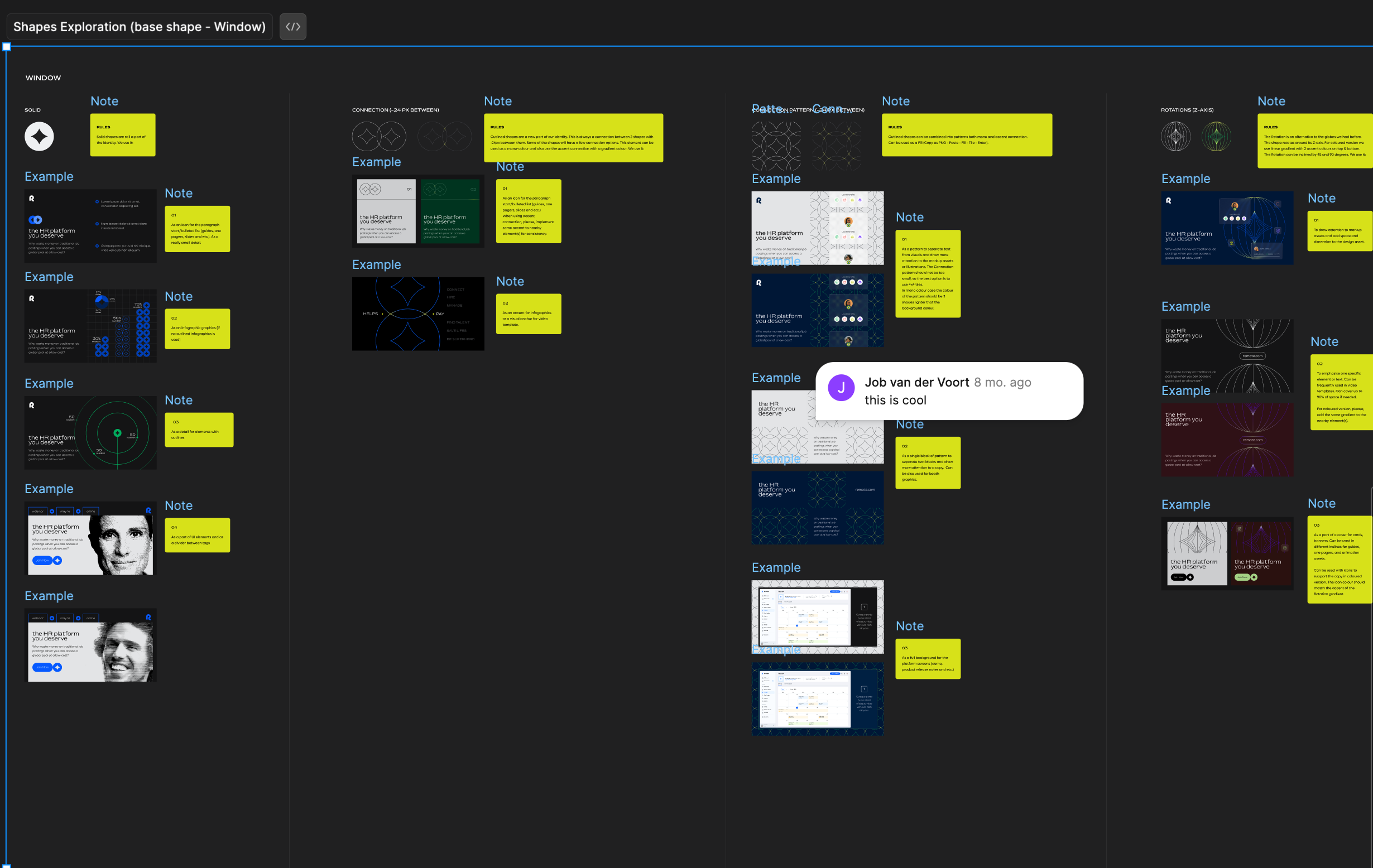
Brand as Strategy
Identity work guided not just visuals but Remote's positioning in the global HR market.
System Thinking
The Zora Design System turned brand from a static identity into an operational engine.
Innovation at Scale
By embedding automation and AI into brand ops, design became a driver of speed, growth, and sustainability.